
 sales@influxxlabs.com
 386 South Abbott Avenue, Milpitas, CA 95035
 +1 (408) 461-7185

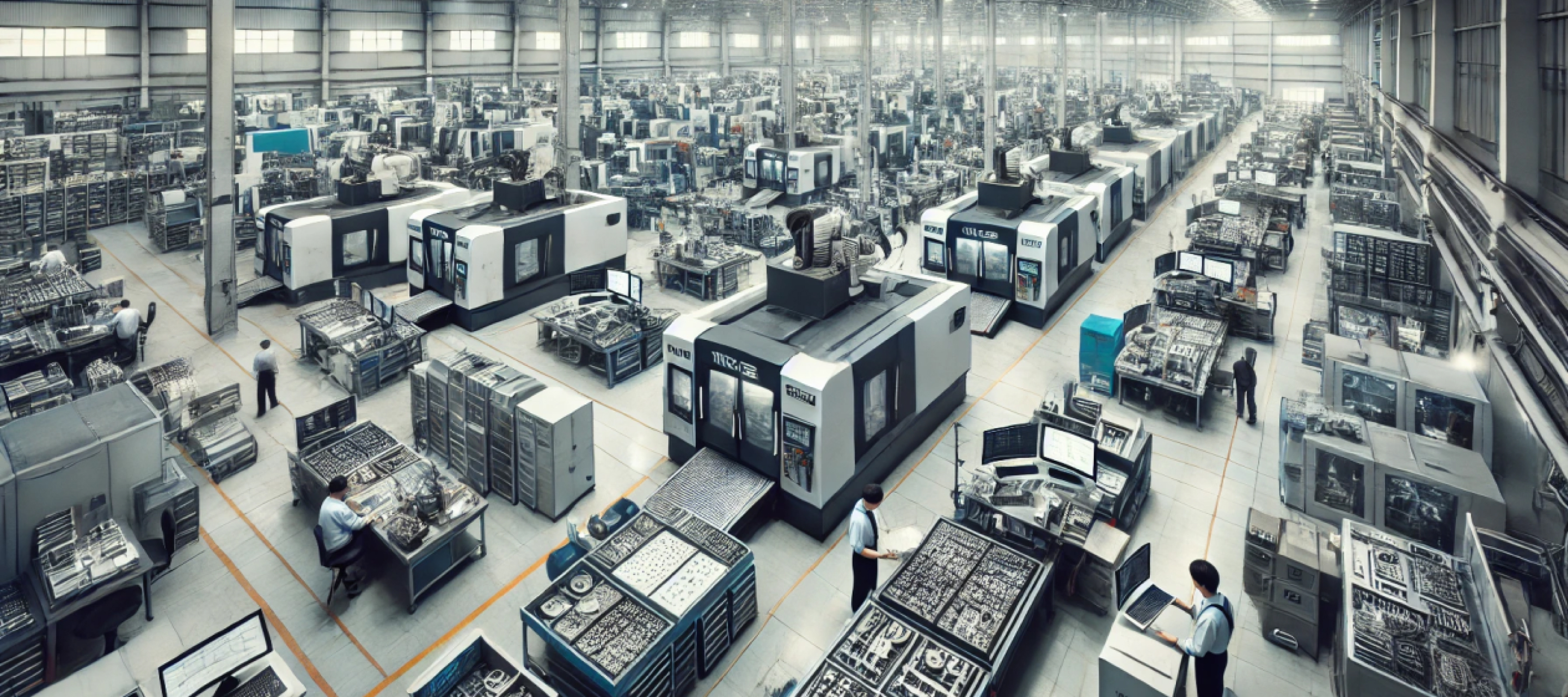
To run a high-quality manufacturing unit, you need two constants: precision and efficiency. All industries rely on precisely designed, superior parts for optimum functionality, from aerospace and automotive to consumer electronics. This is where Computer Numerical Control (CNC) manufacturing helps, letting you form high-quality products from rough ideas.
In technical terms, the CNC manufacturing process uses computers to control machines that create parts and products. These machines can do everything, including cutting, drilling, and shaping materials precisely — all with the help of pre-programmed instructions on the computer. Here’s a detailed guide on CNC manufacturing and how it streamlines operations.
1. Quoting and Planning
Every successful CNC project begins with an accurate quote. During this process, engineers understand the project’s scope and the client’s vision, along with factoring in any challenges that may come up. After all, getting the right details is important, especially if you run a high-performing manufacturing unit in Silicon Valley.
For the quoting stage, project managers review technical sketches, discuss material specifications, and consider the end-use of the product. This facilitates a well-prepared quote that details the costs, timeline, and resources for the project, forming the foundation for error-free CNC manufacturing.
2. Sourcing Materials
After a suitable quote is set, it’s time to source the right materials for your project. The Bay Area is home to a rich network of suppliers and material experts, which ensures you receive the highest-grade products. Whether you need premium aluminum alloys, composites, or exotic metals, Silicon Valley has it all.
3. Programming the CNC Machine
The third and most important step in a CNC machining process is programming, where engineers translate digital designs into machine-readable code. These designs are generated using CAD (Computer-Aided Design) software by the engineer. Drawings are provided by the engineer as well to further highlight critical dimensions, tolerances, and features that need careful attention during the manufacturing software. The programmer will use CAM (Computer-Aided Manufacturing) software to create toolpaths that will cut the design out of raw stock material. The CAM software will turn these toolpaths into a series of commands or codes, called G-code which is loaded onto the CNC Machine.
4. Machining Process
Once the CNC machine is programmed, the code dictates its movements, such as the feed rate, position, and speed. This allows the machine to perform different production tasks, including milling, turning, and drilling. Thanks to these precise technologies, CNC manufacturing makes it easy to produce complicated geometries that wouldn’t be possible with traditional methods.
CNC technology also ensures that every part produced matches the specifications, which reduces the margin of error to almost zero. Plus, it is ideal for rapid prototyping, allowing engineers to produce and test iterations of a product.
5. Inspection and Quality Control
No CNC manufacturing process is complete without a detailed inspection and quality control phase. Industries in Silicon Valley place great value on precision, making it essential to inspect and match every part with the required specifications.
This step involves using a micrometer and or Coordinate Measuring Machines (CMMs) to measure the dimensions of a part with sharp accuracy. Sometimes, non-destructive testing methods are also used to assess the material integrity of a machine part.
Conclusion
CNC is a technology used in manufacturing units. It integrates computers with machine tools to automate and control the production cycles, creating accurate and high-quality products. With CNC, your machines no longer have to be manually controlled – as the human operators are replaced by computer-driven operations.
Consequently, managers can create the same product in a fraction of the time and with perfect consistency, all without the need for manual labor. If you’re looking for a trusted and reliable prototype manufacturing partner in the Bay Area, choose Influx Labs. With rigorous quality standards and years-long experience, we’re committed to your vision just as much as you are.